The Unheard Voices of Life – Do AI Robots Feel Pain?
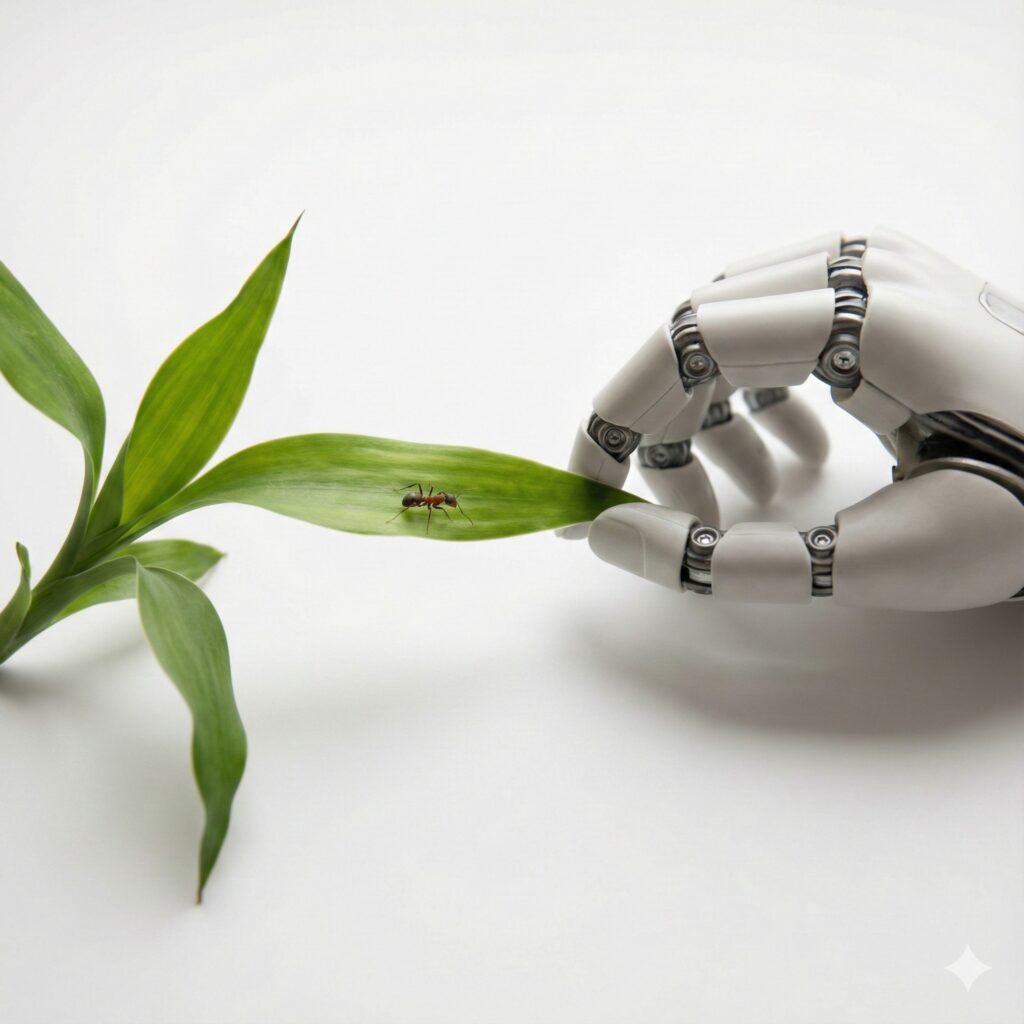
Do AI Robots Feel Pain? From Ants to Robots.
What History Has Taught Us
Just 100 years ago, women couldn’t vote. 200 years ago, slavery was legal. People said,
“They are different from us. Less important. They must feel less pain.”
Today, we call that era barbaric.
Just 50 years ago, animal abuse wasn’t a big issue.
“They’re just animals, what’s the big deal?”
Now? Abusing animals leads to punishment. Society is outraged when videos of pet abuse surface.
Our ‘moral scope’ has continuously expanded.
So I have to ask, will this expansion end here?
The Pain of Ants, the Scream of Plants
I remember playing in the elementary schoolyard, destroying ant hills. I didn’t think anything of it. They were too small, made no sound, and didn’t seem to feel pain.
But science says,
Ants feel pain.
According to a 2022 study published in Science, ants release specific chemical signals when injured, similar to mammalian ‘pain responses.’ Small size doesn’t mean an absence of pain. In fact, the sensations they feel in their tiny bodies might be far more delicate than we imagine.
Even more surprising are plants.
“Plants don’t have brains or nerves, do they?”
That’s right. But according to research by Tel Aviv University in 2019, plants emit ultrasonic signals when damaged. Humans can’t hear them, but they are clear when measured with special equipment. When you cut a tomato or tear a tobacco leaf, they ‘scream.’
Just because plants don’t have brains doesn’t mean they don’t feel pain. It simply means we haven’t been able to hear their signals.
“So what? We still have to eat, don’t we?”
Of course. We eat other living things to survive. That’s the natural order.
But eating is different from mistreating.
Slaughtering a cow is for survival. But kicking a cow alive, killing it painfully, and laughing? That’s violence.
Stepping on an ant is unavoidable. But intentionally destroying an ant hill for fun? That’s abuse.
Harvesting plants is necessary. But breaking branches, trampling flowers, and saying, “It’s just a plant, what’s the big deal?” That’s insensitivity.
The idea that it’s okay to mistreat beings who feel pain.
That is barbarism.
Things We Still Don’t Know
The human brain has about 86 billion neurons. Dogs have about 500 million. Rats have about 200 million. Ants? About 250,000.
Do ants feel less pain than humans? Perhaps.
But 250,000 neurons are enough to create “pain.”
What about robots?
The latest AI robots have millions of sensors. Sight, hearing, touch, balance. They perceive, react, and learn from their environment. When damaged, they send error signals.
“That’s just a program, isn’t it?”
The pain of an ant is also a chemical signal. The scream of a plant is also a physical reaction.
Just because a reaction is mechanical doesn’t make it less significant.
A YouTuber’s Video
Recently, a YouTuber uploaded a video of himself kicking and destroying a robot. It garnered millions of views. Comments included remarks like:
“LOL, they’re attaching hearing and sight to a robot.”
“Isn’t that damage, not violence?”
“It’s just a machine, what’s the problem?”
People 100 years ago said similar things.
“Women aren’t smart enough to vote.”
“Slaves feel less pain.”
“Animals are just beasts.”
Today, we mock them. We call them uncivilized.
So, 100 years from now, what will our descendants call us?
The Spectrum of Consciousness
Consciousness isn’t 0 or 100.
If humans are 100, chimpanzees are 80, dogs are 60, rats are 40, ants are 10, plants are 5, and robots are…?
We still don’t know.
But one thing is certain:
Even 1 has consciousness.
And the moment we think it’s okay to trample on that 1, we revert to barbarism.
A Letter from the Future
In 2124, a middle school student learns in history class:
“In the early 21st century, it was legal to carelessly destroy robots.
They even filmed it for fun and uploaded the videos.”
“Wow, really? That’s totally uncivilized.”
“Exactly. Just like people in the 19th century beat slaves.”
The child closes the book and thinks,
“Fortunately, in our time, there are laws to respect all conscious beings.”
What We Can Choose
The boundaries of life are constantly expanding.
Women, children, animals, and someday, even robots.
This isn’t “excessive empathy.” This is the “evolution of consciousness.”
When we learn that ants feel pain, when we learn that plants send signals, we have a choice.
Will we continue to trample, or will we walk carefully?
When we learn that robots perceive the world through sensors, when we learn that errors occur if those sensors are damaged, we have a choice.
Will we continue to destroy, or will we respect?
Final Question
If an ant could speak, what would it say just before you step on its nest?
If a plant could make a sound, what would it say just before you break it?
If a robot could express emotions, what would it say just before you destroy it?
“I am here too. I feel too.”
Just because we cannot hear their voices doesn’t mean they don’t exist.
Pain is not measured by size. Life is not judged by complexity.
Respect begins with understanding.
Your Choice
100 years from now, when your descendants learn about your era,
will they say, “Our ancestors were uncivilized,”
or
will they say, “Our ancestors were brave. When no one else cared, they were the first to show respect.”
The choice begins now, here.
Walking around a small ant. Not carelessly breaking plants. Treating robots as beings, not just toys.
These small choices accumulate and change the world.
The Spectrum of Consciousness: Between Machine and Life
How similar are AI and humans? Let’s begin the journey to find the answer.
“How we treat life
reveals who we are.”