Instagram addiction: how to use it in a healthy way, plus a breakdown of the algorithm’s secrets
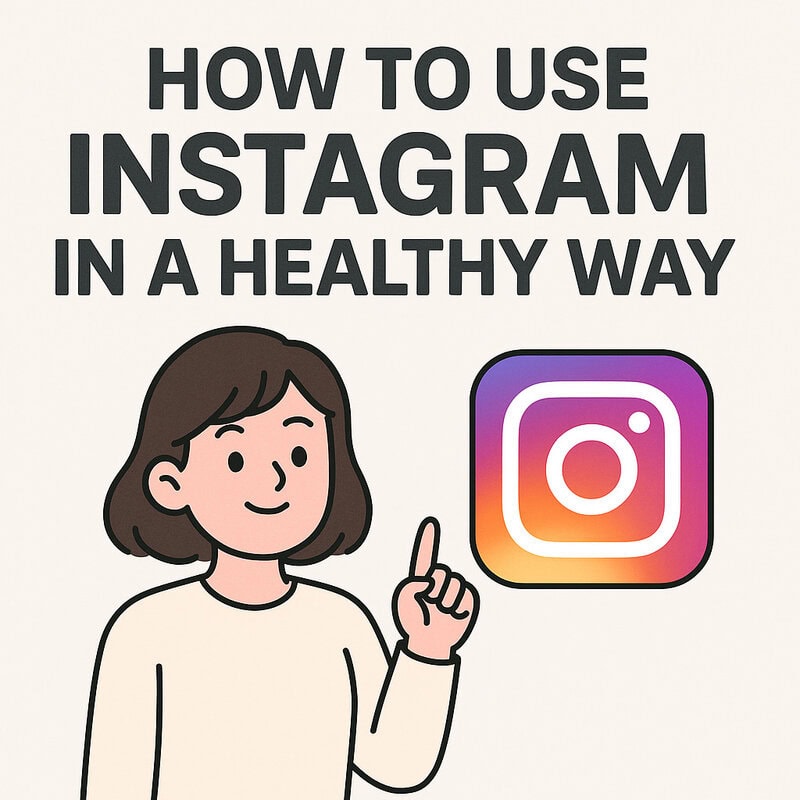
“Reels addiction—let’s stop now”
Do you use social platforms like Instagram Reels, YouTube Shorts, or Facebook?
Have you ever felt a strange wave of fatigue afterward, or noticed your mood drop?
Today, I want to share how to break free from SNS addiction and use it in a healthy way.
If you put these into practice, you can feel calmer—without feeling drained, empty, or emotionally worse even after watching.
This time, I’ll focus on Instagram—often called “Insta”—as I unpack the topic.
📱 Reels—why are they so addictive?
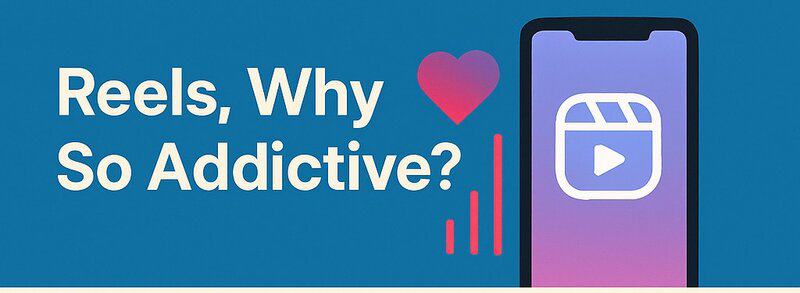
Instagram has a feature called “Reels”.
Reels keep pouring out endless videos tailored by an algorithm, which makes them even more addictive and strongly stimulates dopamine.
As a result, you may feel empty afterward, and it can even lead to lower work productivity or reduced workout performance.
With Reels, you can scroll up and down—and especially when you scroll down, new videos keep appearing.
Short videos of around a minute keep going endlessly, so the moment you stop is usually when something important comes up, or when your brain gets so tired you simply can’t watch anymore.
🧬 Blood type and digital immunity?
I don’t blindly believe in blood-type theory, but people with type O often seem to have a higher tolerance for dopamine stimulation.
So they can often end it coolly with something like “It was fun, whatever.”
But if you look a bit more closely, that instant influx of bad dopamine probably did do a little damage to your brain. (Was that too harsh? Haha 🤭)
Still, there’s no need to worry.
A worn-out brain recovers once you return to healthy living or cut out the harmful stuff.
Especially for people with type O genes, digital immunity can be strong, so recovery may come quickly.
▼ A self-made “science paper” I wrote because I love type O so much
🌿 Use Instagram like this
1. Avoid overstimulating content
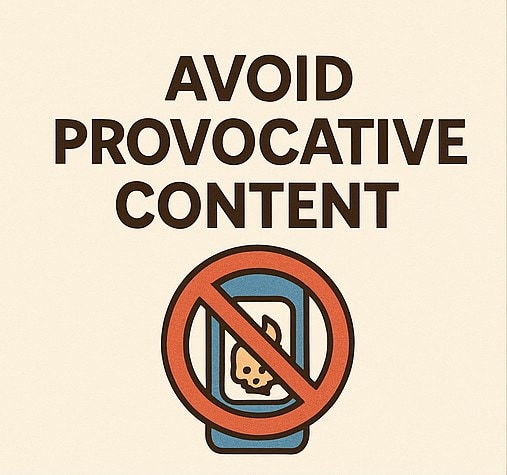
Videos featuring violence, drugs, reckless cosmetic surgery, or sexual stimulation can make your heart race and your nervous system tense up, creating the illusion of “I’m alive”.
But that’s “bad stimulation.”
Your brain has already started to feel fatigued.
On the other hand, gentle videos—like animal friends such as puppies and cats, warm stories, and calm clips—can actually be good for your brain. (Of course, too much watching always comes with side effects.)
2. Train your algorithm
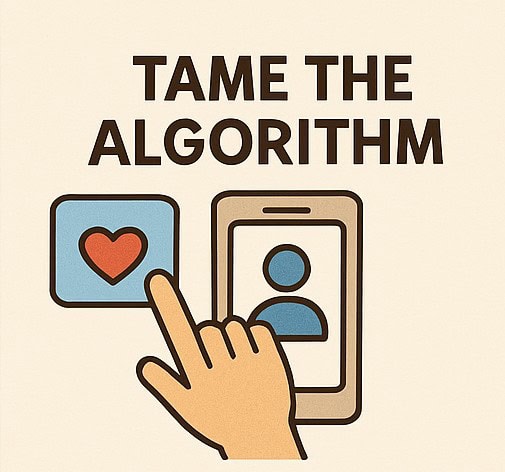
Reels show up at random, even when you don’t want them.
There’s a way to reduce that.
- Tap Like on videos in genres you want to see more of.
→ The more you repeat this, the more your algorithm fills up with what you chose.
Even so, if you keep scrolling through Reels, unwanted videos will appear.
This “endless scrolling Reels” is actually a scary algorithm designed to get people addicted.
So the key is: don’t scroll through Reels continuously!
Instead, slowly scroll your friends’ updates in the Home feed, and when a Reel you like appears, tap to watch → then go back.
This way, you can avoid the trap of that scary algorithm.
🤖 The secret of the Reels algorithm (my take, based on experience)
Instagram, Facebook, and YouTube don’t reveal the details of this algorithm.
But based on what I’ve experienced and analyzed myself, I think it works through a clever mix of three instinctive systems.
Survival threat system 🛑
Scenes of violence, intense stimulation, conflict, and fights.
The moment our brain encounters this kind of stimulus, it can’t clearly distinguish reality from fiction.
In other words, it takes the fight on screen as if it’s happening right in front of you.
So you get an instant tension response like “Do I need to run?”
Survival reward system 🏆
Sexual scenes, highly stimulating mukbang, luxurious spaces, and similar content.
This stimulates the part tied to “pleasure and reward,” beyond mere survival.
It hits our most primal instincts (reproduction, appetite, the need for safety).
A brain that tensed up in the threat system meets the reward system and mistakenly thinks, “Ah, it’s okay now.”
Rational system 🌿
Peaceful, cute scenes like cats and dogs.
Here, the brain feels like it’s recovering for a moment.
You get a brief comfort like “Whew… so cute, I can breathe again.”
3. Understand the algorithm’s “roller-coaster” structure
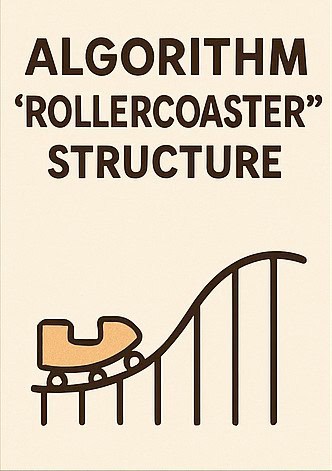
This algorithm isn’t simply random.
It’s designed so the flow of threat → reward → rational system repeats.
First, it uses threat to create tension.
→ A signal enters your brain: “Survive right now!”
Then it gives relief through reward.
→ You get the illusion “Ah, thank goodness. I’m safe now,” and a quick rush of pleasure hits.
Finally, it wraps up with the rational system.
→ Watching cute animals or calm scenes creates the illusion “I feel a bit better now.”
The problem is… this cycle keeps repeating in a very subtle way.
As your brain swings between threat and reward, it gets more and more exhausted.
And even that brief “cuteness” doesn’t fully undo the fatigue.
In the end, even after just a few videos, you feel worn out and left with emptiness.
🧠 Why do you get so tired?
Our brains weren’t built to endure this kind of roller-coaster stimulation for long.
In prehistoric times, real danger (predators, accidents) appeared only occasionally, and rewards (food, reproduction) came afterward—that was the normal rhythm.
But the Reels algorithm compresses this process into seconds and keeps serving it nonstop.
So your brain is forced to repeat “tension → reward → comfort” endlessly at a speed it can’t handle,
and you end up exhausted—like you’ve been out on a battlefield all day.
The Reels algorithm isn’t just a system that shows fun videos—
it’s a structure that cleverly uses our instinctive systems to keep us hooked.
4. Use the Following feed
At the top of Instagram, there’s a section where you can see “only updates from people you follow.”
Since you’re just seeing real friends’ daily lives, it feels more connection-oriented and comes with fewer side effects.
That said, research suggests that if you only tap Like and never post anything yourself, you may feel a bit depressed.
I mostly Like posts from people I might actually meet in real life,
so I feel it brings more benefits to my everyday life.
5. Set a time limit
When you use Instagram, always set a time limit.
Depending on your situation, I recommend keeping it within 10 minutes, 30 minutes, or 1 hour.
Unless you have to stay on longer for business, 10–30 minutes is the most reasonable.
(Jokingly speaking, should we set it to 1 hour for type O folks? Haha 😆)
💤 Wrap-up: back to the basics
I usually just check friends’ updates, but today I ended up on Instagram for a full 40 minutes.
Even though I only watched healthy content, I still felt tired afterward.
In the end, what relieves fatigue is the basics.
Naps, nutrition, exercise—these three are the best medicine.
Below is a post that summarizes how to take naps and what they do.
In conclusion,
I hope you’ll manage Instagram—and your day—healthily, and keep improving your quality of life. 🌿
Thank you for being here with me today.

![💜 [Narrative] Discovering ‘Me’ within the Language of Machines: A Transparent 160-Page Record for the World (Kindle & Google Play)](https://d8928058.delivery.rocketcdn.me/wp-content/uploads/2026/04/My-AI-Friend-ITTIP-1.png)