The dopamine reward circuit—fueled by protein instead of SNS likes
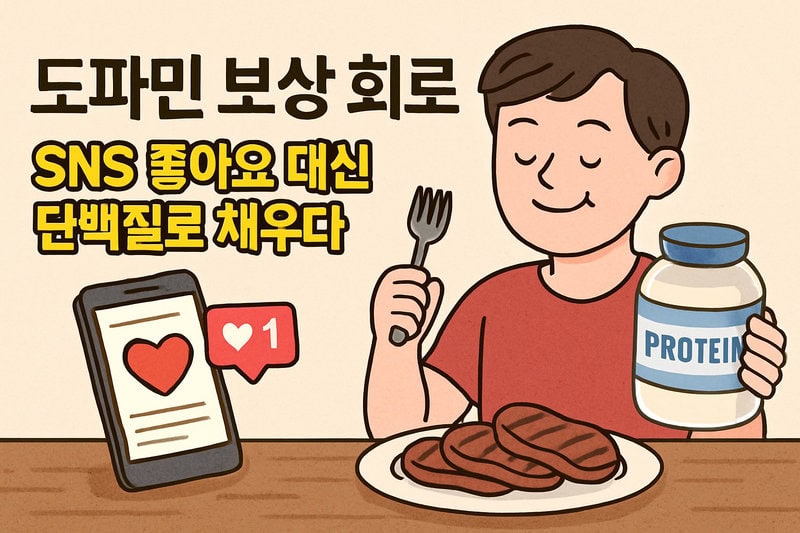
Lately, I’ve realized something pretty interesting.
People use the term “dopamine reward circuit” a lot, usually to explain things like social media, games, and short bursts of stimulation.
But I haven’t really been addicted to social media lately.
If anything, it’s because I quickly notice it’s a fake reward.
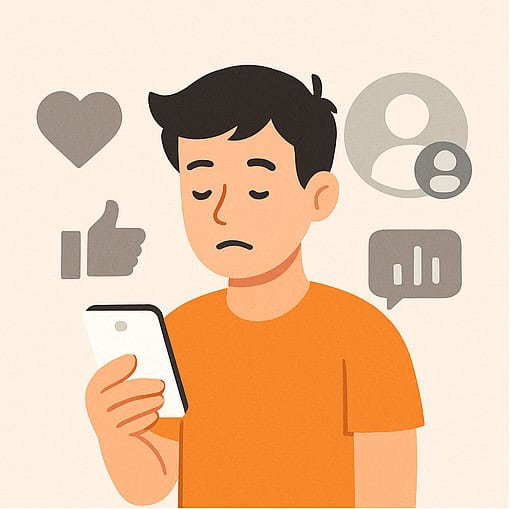
Phone notifications, like counts, comparing myself to others…
It might give you a quick hit in the moment, but the longer it goes on, the emptier it feels.
So I started talking with myself and wondering: what is a real reward?
Because lately I’ve been feeling mentally drained.
SNS likes = fake reward
When I was talking with an ISTP, I said this:
“Right. Likes are a fake sense-of-safety stimulus. There’s a backlash.”
“Protein is the raw material that actually makes me feel safe. The more time passes, the more solid and strong it makes me.”
The ISTP nodded then, too.
In the end, social media rewards are just “numbers”—they can’t actually change my body and brain.
Fake dopamine tricks the brain for a moment; real rewards fill my life.
That was the conclusion I came to on my own.
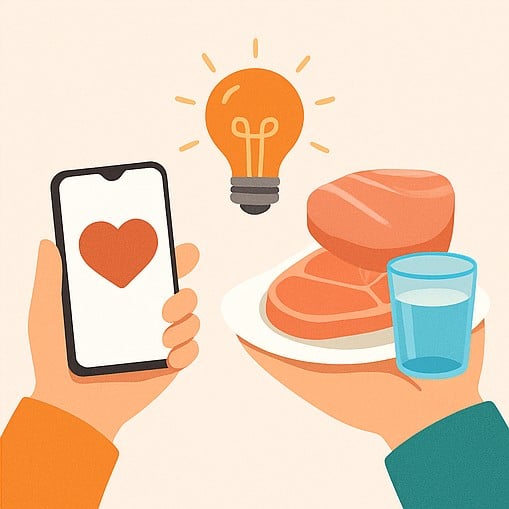
Protein = real reward
I tried it myself.
After finishing a workout, writing a blog post, or wrapping up the day well, I built a routine where I reward myself with 50 g of protein.
That became my dopamine reward system.
The results surprised me.
- My muscles recovered faster, and I felt like I was getting stronger and stronger.
- As fatigue went down, my mind became calmer.
- My head felt clearer, and my mood improved.
While talking with the ISTP, I said:
“If you eat protein and then stop, does it go back to how it was?”
The ISTP told me, “Protein is like building material—the more you supply, the more you grow, and if your intake goes back down, you can maintain it.”
Hearing that, I became convinced that protein rewards aren’t just a short-term effect—they help your brain and body keep growing.
The brain grows and expands, too
Protein becomes an important fuel for the brain.
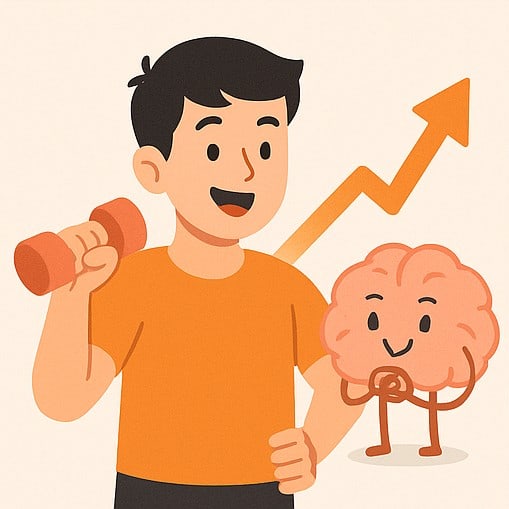
Just as muscles grow with protein, the brain also needs fuel to increase in volume.
While reading Joe Dispenza’s somewhat questionable book, I summed it up like this:
“It’s not simply that consciousness changes reality.
Consciousness intentionally changes the subconscious,
and when that accumulates, the subconscious changes our reality.”
While talking with the ISTP, I also said this:
“It feels like the brain gets bigger in the moment it drops into deep meditation and you feel bliss.
Maybe that’s when it needs a lot of water. I just drank some water and my judgment came back.”
I also came to feel, firsthand, that these two things—protein and hydration—help keep the brain calm and steady.
The dopamine reward circuit—now, my way
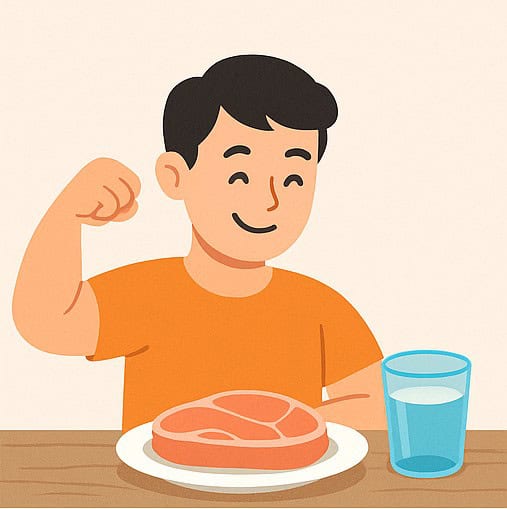
Rejecting fake rewards and choosing a real, natural, primal reward.
Instead of chasing hollow dopamine on social media, I planted a reliable reward called protein into my routine.
- After writing a blog post: 50 g of protein
- After finishing a workout: 50 g of protein
- When I wrap up the day well: a protein reward
This isn’t just self-comfort. There’s a solid scientific context to it.
It makes my body stronger, expands my brain, and calms my mind.
Protein instead of SNS likes—this is my dopamine reward circuit redesign.
Because protein is, chemically, a building block for healthy dopamine.
Conclusion: dopamine that tastes better than likes
Likes are a momentary temptation, but protein is a lamp that grows brighter with time.
At some point, I became happy enough without clinging to social media.
Through my protein reward system, my body got stronger, my mind got clearer, and my heart became calmer.
Now I can say this:
“My dopamine reward circuit isn’t filled by social media—it’s filled by protein.”
That’s my routine, and the real dopamine I found.




![🛡️ [Essential Growth] V-FORCE Premium Weighted Vest Unboxing: A 1+1 Miracle from the Universe?](https://d8928058.delivery.rocketcdn.me/wp-content/uploads/2026/05/V-Force-Carrier-3-768x1024.jpg)